Monday, 9 May 2011

Is blogging journalism?


DEFINITION OF A BLOG: a series of updated posts on a web page in the form of a diary or journal, often including commentary on, and hypertext links to, other web site.

"They are opinionated, ranting, often incoherent and frequently biased with little regard for accuracy or balance." This is the opinion held by many when it comes to bloggers. Blogging has recently emerged as a new way to communicate views and opinions on a menagerie of subjects. But the real question is; is blogging really journalism?

Blogging has taken the virtual world by storm. Vast amounts of bloggers are constantly ranting and raving about something; from the war on terror and the latest presidential elections, to Lady Gaga's latest fashion faux pas, and who is Katie Price dating now? Journalism is made up of the concept of explaining and putting forth your view on a subject, but whether blogging falls under the journalism category, I'm not sure. Journalism is more about reporting the news, and to an extent it is supposed to be entertaining, but we don't need constant video feeds and links to tell us so. Because remember, can we really trust everything we read on the internet? In my opinion blogging isn't true journalism. When dissected it is compiled from aspects of journalism, but as a whole it's literally just you portraying your heart felt opinion on something and not looking at the facts. It's predominantly a very amateur way of putting your journalistic view across, it doesn't quite tick all the boxes.

However, some blogs, very few, provide an equal balance between entertainment, fact and opinion. Blogging is also comprised of having a 'blog format' and a prime example of these attributes is http://www.culturebully.com/, which you can see below...


 It provides the reader with new music in the form of reviews, features and music videos, giving you the chance to listen to the music to form your own opinion. So from this angle I can see how blogging is journalism.

Quotes taken from: http://www.journalism.co.uk/news-features/blogging-the-new-journalism-/s5/a5604/ 


What are the main differences between print and online journalism?


The detail and scope of print journalism is incomparable with that of online journalism. Print journalism also offers another big plus; free CD's, aswell as physically having the magazine to hand giving you the freedom to glance through at your own pace. I think the perception of online journalism is perhaps to feel a little skeptical about what you're reading; the internet has the infamous conception that anyone can edit or write anything. So can we really trust what we read online? And subsequently, the internet poses a larger threat; "it is not just music journalism that’s being eaten alive by the internet; newspapers and magazines everywhere are losing readership and advertising revenue." Will online journalism decrease the desire and need for music journalism altogether, whether print or online? 

Ultimately the question is 'is the written word dead?' No, is the answer. BPM looks positively at a gracious future for us music journalists in this technological era; "Music journalism seems particularly different in the Internet era because the entire music industry is changing, too. Not long ago, every garage band dreamed of being on the cover of Rolling Stone. Now, most musicians would gladly trade a magazine cover for another hundred thousand myspace plays." I feel this quote puts in perspective exactly the differing attitudes towards success in the music business these days, many bands would rather have a gazillion plays on myspace these days than a feature in the latest issue of NME. 

On a more positive note, online journalism is always current and constantly being updated, you're not in the situation where you have to wait for the next publication to be released to find out what's going on and you are able to type in your chosen subject and, presto! You're directed immediately to masses and masses of links to make your online browsing experience a little less stressful. Online journalism is also much more accessible to a mass audience, although perhaps a much younger audience. On another upside point, online journalism gives us the access to various amounts of merchandise relating to music such as clothing, accessories and tickets for live music events. Probably, for me, the most note worthy positive outlook to online journalism is the social aspect it derives from; you're able access writers blogs, comment on their thoughts and interact with other music lovers, providing you with a more inapt knowledge of what others have to say. To put in in perspective "Online music journalism has never been stronger." The differences are there, and there are subsequent negatives to the positives that each aspects of journalism brings.

BIBLIOGRAPHY
http://www.bpmmagazine.net/
http://www.guardian.co.uk/books/booksblog/2009/jul/06/music?INTCMP=SRCH
MUSIC JOURNALISTS I ADMIRE...

"the gonzo journalist, gutter poet, and romantic visionary of rock criticism"
I think the 'music journalism calling' came a little late for me. I LOVE music. Not in the way people just say it, I'm literally IN love with it. It's why my friends are my friends, and why I am me today. So when I'm flicking through the latest edition of a music mag, I can't help but swoon over a perfectly crafted article or review. I love looking at a piece of writing and thinking 'I wish I could write like that...' with such wit and passion, that's my ultimate goal. 

I think obvious inspiration comes from Lester Bangs "No writer on rock 'n' roll ever lived harder or wrote better--more passionately, more compellingly, more penetratingly" J. DeRogatis. (2000). Bangs wasn't afraid to delve and dig to to get what he wanted, he had true passion, believed more than anything of what he was writing for. Many see him as a cynical man, only writing the negative, a pessimist perhaps. But isn't that what a music journalist's supposed to be? He lived and breathed music. 

BIBLIOGRAPHY
J.DeRogatis, (2000) Let it Blurt – the life and times of Lester Bangs, America’s greatest rock critic, Broadway books.

How do I think my writing has improved?...

Throughout my first year on the Popular Music Journalism course I have definitely gained a greater knowledge and understanding into how to write appropriately. Looking back and indulging a little into my features portfolio, I can tell I was verging on grasping which aspect to write from; a news background piece, something more formal, perhaps a little more relaxed, and I feel much more comfortable to know which angle to begin with. My biggest downfall, and in this profession not a good one, is my constant doubt in my writing. I still shy away from others looking and reading through my work! But I'm sure my confidence will grow with a little more practice and hopefully throughout the summer and into the second year I will begin to review EP's, gigs, singles, you name it, in my own time! Also, when looking back through my work I often pick up where I have worded things awkwardly, I think I'm just an awkward writer and word things a bit, well, awkwardly?! I also feel I need to develop more depth in my understanding of music as a whole; looking at artists and bands, genres and different styles of music. This will give my pieces a more rounded feel to them, and show that I have intelligence and awareness of what I am writing about. 
What is the role of the music journalist today?


In this day and age it is felt that music journalism is on it's way out, heading further and further out of the public eye, due to numerous factors. The day of the taste maker is long gone, leaving us with a drivel of poorly driven opinions about todays 'Hot 40 UK'. "Historically, the critic has served various roles. As entertainer, specialist advisor, risk-manager, archivist and public whipping boy." However, music journalists and critics are still predominantly necessary to guide us towards good music and steer us away from something that's hardly worth listening to. 

"To be a music journalist back then was to be important - not only to the record companies, but to the artists and the record-buying public." The role of the music journalist has certainly changed... I divulge...

The role of the music journalist is to inform and share opinions and thoughts of present, past and up and coming artists/bands, live events, genres and styles; anything entirely relating to the music industry to a relative audience of common interest or even perhaps opposing interest. We are here to discover music trends, discuss them, divulge into all depths of music and to share our opinions with others. We act as the opinion leaders, we are the rock interpreters.Sadly over the years, the personalised, quirky style and more emotively, the passionate style of writing has some what diminished. The great writers of the 1960's; Lester Bangs who was launched as writing in the style of 'Gonzo journalism', and Barry Miles who truly worked his way up the tiresome media ladder, had a distinct style of writing and sadly that is extremely rare to find in today's music press.We are now left with magazines that are more consumer lead, with less inspirational writers, with a less indirect role, no ambition to traipse, trawl and discover new exciting music. Thus the role of the music journalist is at the most crucial point it has been at for decades.

BIBLIOGRAPHY
http://drownedinsound.com/in_depth/4137382-kissing-without-the-sex-%E2%80%93-the-role-of-the-music-critic

What have you learned from Tri-Media? How can this be brought most effectively into your journalism?

Within Tri-Media I have learnt multiple skills that are used within the music industry as well as ones that I will potentially be using within the industry in the future. Our first assignment was to organise and film a live interview, we managed to get in touch with James Moodie of Flatpack Records who was a former student at Southampton Solent University. We had to schedule a suitable appointment, find a suitable location and come up with a script of relevant questions to fit the brief we were given. Once recorded, we were then given a few sessions to edit our work, with an overall outcome of a polished recorded interview. I feel this can be brought into my journalism as I am now able to record an interview using a digital recording camera, but more effectively I was able to develop my interviewing skills, not only by following a script but adding in and asking more questions where I feel my interviewees answers could be developed. This will give me confidence in the future to delve further and obtain the answers I need.

Our second task within Tri-Media was to produce a page for the student newsletter VIBE, We had already produced the feature in Journalism tutorials, so it was just a case of designing the layout itself using Adobe Indesign. This gave us the chance to use a programme that is used within the industry and get to grips with magazine design, as well as deadlines. We learnt design techniques, chose a house style, and had to produce our design according to a deadline. This gave myself an insight to how magazines are produced and put together, particularly online magazines. This will will be useful in journalism as the journalistic approach is quickly moving from print to online so has given me an insight into what I can expect in the future. 

My third assignment in Tri-Media was to produce a website using Adobe Dreamweaver. This gave me the chance to design my own website and upload all of my previous pieces of work that I done amongst the course. This will help me within journalism as it gives me the opportunity to showcase my work, so when I am launched within the music industry it shows the variety of skills I have.   
What is the difference between fan-writing and music journalism?

Ultimately there are huge similarities between fan-writing and music journalism. They're both writing about something they have passion for and generally both have an in depth knowledge of writing. However the criticism of the music journalism is lost amongst the fan-writing, there's a vague understanding of analysing the music, more opinion than actual substance.  

"Professional music journalists are seen as people who write because they are paid to do so, not because they have any particular interest in what they are writing about." Fan-writing tends to be more focused in a positive way, and with the lack of professional wring techniques but ultimately gets the same point across, just from a different aspect.

BIBLIOGRAPHY
http://www.lundwood.u-net.com/fandissy/fdhist.html
What have you learned about magazine design and the way it communicates meaning? 

There are various principles that constitute structural aspects of magazine design and have to be taken into account in order to produce a successful magazine layout.

The front cover is what you come across first "you skim the newsstand; take in the brilliant colours, the gripping cover lines, the clever or intriguing or outlandish photographs" King, S. (2001). It is crucial that it's eye catching, provocative and grabs the attention of the consumer. NME always does so, with a large image of the feature image, a strong logo of the magazine name and includes information on other reviews and features. You can see all of these attributes clearly to the left... "The golden rule for any front page should be 80% image to 20% type"

You need to judge how to balance your layout, looking at the arrangement of the objects such as text and imagery, and judging the composition of visual weight. This can be done by looking at images and judging them against the physical structure of each individual page. You can do this in a symmetrical fashion, mirroring the pages, or balancing it out asymmetrically, which is where you place several smaller objects on one side but balance it out with one larger object. This can also affect proportion, whether or not text over balances images and how as a whole, all parts of the composition fit together.

You can see to the right here how Q magazine has used a large strong imagery on the right and page and balanced it out with the majority of the text on the left, thus giving balance.


Visual weight of a composition determines the dominance of certain items upon the page, it establishes perspective and often gives direction of where the eye is to look first and follow after. You also need establish a fluid flow throughout your magazine. A steady rhythm creates a sense of movement amongst the magazine and meshes pages together, establishing pattern and texture and allows for consistency that makes it easier for the readers to understand and follow. 

The overall principle is that of unity; this is where all the individual components of the page come together a bring a sense of wholeness, or alternatively bring in variety amongst the pages. These elements are essential within the music press and those that read it ultimately are lovers of music. Now, it's near impossible to put music into words and actually impossible to put music on a page! Therefore the way in which we design and put together a piece of text is crucial. 

BIBLIOGRAPHY
King, S (2001). Magazine design that works. Rockport Publishers
http://hubpages.com/hub/Design-a-magazine---The-Basic-Pinciples
How I feel my work on Vibe magazine went...

Looking at the piece I did for Vibe magazine, I can see several positive attributes about it as well as some that, if I were to do it again, I'd change.  Firstly, the content of my article. I chose to do a feature on SMILE week, which is a week where people from within the music industry take part in a multitude of industry related events within Southampton Solent University and around the city of Southampton. I feel this particular topic suits my target audience perfectly, students that are part of the music scheme, as well as perspective students and parents at Southampton Solent University. It gives a detailed insight to what the week's about, as well as what went on in previous years. Before I began to design my layout, I looked at various music magazines, such as Q, Kerrang! and NME. I really liked the clean cut stylish way that Q took, revitalising a boring layout by adding in splashes of colour as well as colour coordinating parts, such as making all the features on colour, the reviews another, and the interviews a different one. This created variety, yet establishing a flow.

There are however a few areas that could be changed to make it both more aesthetically appealing and generally fit VIBE itself a lot better. After reading through my finished article, I can see that there are the odd grammatical and spelling errors, so in professional environment, it wouldn't pass as a feature article. Generally I feel the overall layout of my article looks suitable, but I should have condensed down the content so I could make the text larger and easier on the eye. The image is also fairly unclear, therefore I should have chosen a brighter, sharper image. The page also looks quite bland, hints of colour amongst the title or quotes would have also made it more aesthetically pleasing.

So overall, after looking at my piece as part of a magazine, I feel I should have added more colour, better imagery, and generally formatted my piece better. From the process of producing a magazine spread on Adobe Indesign I have learnt that I can be a little more creative when it comes to making a page, as well as perhaps not rushing it, learning to understand the process more in a professional environment.
What form does fanzine/DIY culture take today?


Fanzines nowadays come in the form of blogging more than anything, but there are still small time publications, often low budgeted, that are still in circulation today. But fanzines began in the era of punk, often a way of putting their non-conformist view out there. With the decline of print journalism, it is predominantly thought that these fanzines would have disappeared, but there are those who still produce them as an alternative way of getting word, discussion and views out. "Fanzines are integral to the development and popularization of alternative music scenes" (R. Shuker. 2002) They provide a niche for getting the alternative music scene into the mainstream, they're not about posing or looking pretentious, simply about sharing new, exciting alternative music.

BIBLIOGRAPHY
R. Shuker, (2002). Popular music: the key concepts, Routledge.
How do Vibe and Rolling Stone represent race and ethnicity?

Lil Wayne Rolling Stone cover

The predominant difference within music is 'black music' vs. rock/indie/goth/metal, and so on. Black music magazine Vibe is often set apart from other music magazines such as Q, Mojo and Rolling Stone. However it is more or less the genre public that sets these apart due to the stereotypes related to genre.

Vibe was launched in 1993 by founder Quincy Jones who "envisioned a magazine that would be to urban music and urban culture that Jan Wenner's Rolling Stone would be to rock music and the generation that defined it". It's clear to see there was a niche in the market to produce a magazine that solely promoted and represented hip-hop and rap. Vibe has held its title as being a magazine that focuses on these genres and stereotypically speaking, and from looking at the website, you can see clearly that Vibe is targeting young black males and females, between the ages of 18-25. The adverts displayed are black artists and actors, such as; Rhianna, Lil Wayne, and Drake. 


Despite this, Vibe doesn't set itself apart from any other music magazine "VIBE is a music magazine, the way  Rolling Stone is a music magazine." Alternatively we can take a look at Rolling Stone website, here on the left, and see that it features Wiz Khalifa and Jimi Hendrix at the top of the '100 great guitarists', proving that the rock genre is made up of numerous races. 


BIBLIOGRAPHY
S.C. Watkins. (2005) Hip Hop matters: politics pop culture and the struggle for the soul of a movement. 
http://www.rollingstone.com/music
http://www.vibe.com/

How do magazines like NME and Kerrang! reflect gender and subcultures?

NME predominantly targets males, with a ratio of 73% of the readers being male, and a minor 23% are female, therefore making the primary target market males between the ages of 17-30. Bauer Media, the publication group for Kerrang! gives a reader profile of it's magazine; "Jim, 22, lives and breathes rock music" which is a similar readership to that of NME.

Kerrang! is known as a music magazine that reflects the heavy metal genre, and stereotypically this is a genre that surrounds male attributes, gender within metal is basically defined by "harsh, abrasive timbres, which contribute to the cultural association of masculinity" ( Leonard, 2007).The majority of front cover features are bands that comprise or are fronted my males, yet this stereotype is rivalled slightly within Kerrang! with the rise of females within the metal/pop-punk genre, such as Paramore making Hayley Willilams a popular cover girl and an aspiration for young girls, increasing the female readership. So as a whole, Kerrang! tends to target the metal subculture quite accurately with the bands it features.  Kerrang! represents a series of subcultures, famously of all the Goth; "Kerrang! magazine read by Goths and those into nu-metal and metal music, has recently become the most popular music periodical in the UK" (Waddell, T. 2007) 

IPC research suggests "Live music is more important to men's lives than football, according to new research that shows they also want to buy tickets for gigs and festivals from iTunes and welcome brands investing money in the live sector." This statement shows how the male's priorities have changed in recent years, certainly those belonging to the ABC1 socio-economic group. 

I think looking at today's NME, there is more of a general balance, yet the language used is cocky and egotistic, more often than not written by males. This language means males are on par with what they are reading, whereas women would find it more insulting and not necessarily agree with what is being said. Generally speaking, NME focuses around the indie genre, yet delves into rap, hip-hop and recently dubstep, but is always at the fore front of the latest music trends. The bands featured are usually fronted by male, thus reflecting the male readership.    

BIBLIOGRAPHY
http://www.nme.com/mediapack/pdf/nme_media_information_full.pdf http://www.bauermedia.co.uk/Global/mediapacks/Kerrang.pdf
Leonard, M. (2007) Gender in the Music Industry Aldershot: Ashgate
Waddell, T (2007) Cultural expressions of evil and wickedness: wrath, sex, crime. Radopi
The 1970's were iconic for it's journalistic icons. But how much has it really changed since then?...


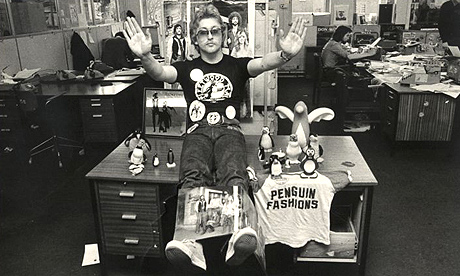
Tim Lott in the Sounds office

Tim Lott ... 'To be a music journalist back then was to be important'


Music journalism took a huge turn in the 1980's, there was the rise of the style press. At this particular point in time we saw a boom in post modern pop music and a time where we began to celebrate design and the attributes it could bring to the music press. However, this lead to the accusation that the music press had become more or less style over substance and we began to see the disappearance of the personality writers that had been so abundant in previous years, such as Lester Bangs, Nick Kent and others. It began that the writers became much more self aware.
We then saw various enormous changes in the 1990's beginning with the introduction of the riot grrrl. This feminist empowerment of punk was bought into commercialism by the Spice Girls, thus giving exposure and paved the way for female journalists such as Mary Ann Hobbs and Sara Marcus. The 90's also saw the hip-hop genre steadily making its way into the music scene, with magazines such as The Source and Vibe emerging. This further gave an introduction to journalists that could represent black music in the 90's and 00's. dream hampton is hugely influential and has gone on to make films and write Jay Z's biography, proving that more or less, journalists tend to work in other fields of the media nowadays.


The 'rock journalist' also developed into a tighter sub-genre, we now have the pop/indie writers such as Peter Robinson and Alexis Petridis who writes for The Guardian, and Kitty Empire, for The Observer.


I think that majority of the changes in music journalist is due to the technological shifts and the way in which we now view the internet as our primary source for finding new music. There has also been huge cultural changes such as the emergance of black music into the mainstream that will have affected these changes, as well as many, many more women within music journalism. A pivotal move was in 2009, when Krissi Murison became editor of NME, a position rare for a female to win. Finally, there is now such an abundance of people who call themselves journalists, yet thirty years ago these writers would only be in fanzines, yet instead they're plastered throughout mainstream music press! A change for the worse I'd say...

Sunday, 8 May 2011

A thing of the past?

Where do you see music journalism going in the future?
We see fads come and go, even within the music industry itself, but music journalism as a whole? Ofcourse it has a forseeable future, whether it will face times of strife or not, well, I can't see it exercising the powers it used to have; back in the days of the cocky, egotistic writers of their time, where their opinion was everything. John Keenan of The Guardian stated"And I don't mean to argue that good rock writers are all dead or past it." This is a more than common thought within the music journalism world, that the great music journalists have been and gone. But thhe use of the word hasn't quite diminished yet, it's a powerful thing. We as music journalists pose the way who's the next big thing, formidably, we write the charts. At the end of the day it's all about money, about greedy conglomerates. So of course it'll stay. But as for print journalism, alas, the internet has taken a firm grip on our society, it gives us the freedom to persue much more than any flimsy magazine could.

All areas of the music industry have been impacted by blogging, and the internet in general; "The digital revolution hasn’t just impacted music creation, access and distribution — it’s also shaken up the world of reporting, criticism and publicity." The future certainly looks shaky but there is always going an area of scope for music journalists.

QUOTES FROM: http://www.guardian.co.uk/books/booksblog/2009/jul/06/music?INTCMP=SRCH

What would be your dream blog?

Ahhh, what a sweet dream it would be. To broaden and take hold for myself a more ecclectic music taste, somewhere I can explore and develop my understanding of the way music is presented and stylised by expressing my own opinionated views, to look at what's current, what's going to be a hit in the future, and adversely not worrying whether my opinion matters. I'd like to include a variety of music genres, all the way from heavy metal and indie, to folk and hip-hop, reflecting my indulgence to discover new, exciting music.